
What’s Developing | Summer 2026
Significant Changes to Federal Rules Implementing the Endangered Species Act
Over the past several months, three significant changes to the regulatory implementation of the Endangered Species Act (“ESA”) have occurred. These changes arise against a backdrop of changing administrations and evolving judicial standards governing deference to agency interpretations of statutes.
First, on March 30, a federal judge in the Northern District of California vacated or modified several 2019 rule changes regarding Section 7 interagency consultations contained in 40 C.F.R. Part 401. Center for Biological Diversity v. U.S. Department of the Interior, No. 24-cv-04651, 2026 WL 898264 (N.D. Cal. Mar. 30, 2026). Section 7 requires the U.S. Fish and Wildlife Service (“FWS”) and National Marine Fisheries Service (“NMFS”) (collectively, “Services”) to determine whether the effects of a federal action (such as wetland permitting) will cause jeopardy to a listed species or result in the destruction or adverse modification of critical habitat designated by rule. The District Court’s ruling, among other changes, reinstated the broader, Obama-era definition of “effects of the action” and removed the mandate to consider only the effect of the action on critical habitat “as a whole.” Both changes can be expected to make consultations more stringent and time-consuming. This decision is currently being applied to pending consultations in Florida.
Second, on July 14, the Services removed the definition of “harm” from their rules implementing Sections 9 and 10 of the ESA, contained in 50 C.F.R. Parts 17 (FWS) and 222 (NMFS). 91 Fed. Reg. 43,300. Section 9 of the ESA prohibits the “take” of endangered species without authorization, and Section 10 allows the Services to issue permits for such “take” in certain circumstances. The Act defines “take” to mean “harass, harm, pursue, hunt, shoot, wound, kill, trap, capture, or collect.” Previously, the Services’ rules expressly defined “harm” to include “significant habitat modification or degradation where it actually kills or injures wildlife by significantly impairing essential behavioral patterns.” In the preamble, the Services indicate a belief that the “best meaning” of harm in Section 9 of the ESA is limited to affirmative acts that directly injure or kill wildlife, relying on the principles of statutory construction set forth in Loper Bright Enterprises v. Raimondo, 603 U.S. 369 (2024). This rule takes effect on September 14, 2026, and will substantially alter the landscape of listed species permitting and likely also increase permit challenges by environmental interests. However, the change applies prospectively only, and litigation challenging the amendment has already been filed in two separate federal courts, which could result in a stay.
As a practical matter, in Florida, regulated interests should remember that the Florida Fish and Wildlife Conservation Commission (“FWC”) rules still include the definition of “harm” that has just been removed from the Services’ rules, and all federally-listed species are listed in the FWC rules as state-listed by virtue of the federal listing. Currently, FWC does not impose separate state regulations on most federally-listed species (with some exceptions, such as manatees and marine turtles), and FWC staff have advised that rulemaking would be needed for FWC to step in to fill the void left by the Services, if it chooses to do so. Additionally, several local governments (e.g., Hillsborough, Lee, and Charlotte County) have their own requirements governing protection of significant or essential wildlife habitat of listed species. Further, applicants for environmental resource permits are required to provide reasonable assurances that proposed activities in wetlands and surface waters will not adversely affect listed species or their habitats. Removal of habitat protection at the federal level is thus not expected to affect state or local processes, at least not immediately.
Finally, on July 21, the FWS repealed its so-called “blanket rule” in 50 C.F.R. Part 17. 91 Fed. Reg. 45,724. This rule automatically extended the ESA Section 9 “take” prohibition for endangered species to threatened species, unless a species-specific rule provided otherwise (NMFS never had a “blanket rule”). This rule was repealed in the first Trump Administration and reinstated late in the Biden Administration. Now, rather than automatically extending endangered-level protections to all threatened wildlife, FWS must adopt species-specific protections. The rule only applies to species listed as threatened on or after August 20, 2026, and thus is not expected to have an immediate effect on species permitting. Environmental groups have already filed legal challenges or formal notices of intent to sue.
Legal Updates
Florida Appeals Court Holds That Permanent Density Restriction in Settlement Agreement is Unenforceable
Lee County v. Captiva Civic Association, Inc., No. 6D2025-0335, 2026 WL 1458703 (Fla. 6th DCA May 22, 2026).
In 2003, Lee County (“County”) entered into a mediated settlement agreement with the Captiva Civic Association (“Association”) to restrict available density within the South Seas Resort District (“SSRD”). The settlement agreement purported to permanently limit the SSRD to its historical maximum density of three units per acre and prohibited the County from issuing building permits for any density beyond 912 units. In 2023, the County amended its Development Code to exempt the SSRD from the three-unit-per-acre density limitation, and the Association filed suit to enforce the settlement agreement. The trial court granted summary judgment in favor of the Association, declaring the permanent 912-unit limitation enforceable against the County. On appeal, the Sixth District Court of Appeal reversed, finding that the perpetual density restriction contained in the settlement agreement was unenforceable as a matter of law. The Court first noted that a local government’s zoning and permitting regulations are exercises of its police power and re-affirmed the longstanding principle that a local government cannot contract away the exercise of such power. Because the settlement agreement permanently prohibited the County from increasing density, it preempted the will of a future County Commission to legislate a different development density. The Court held that such a concession was an unenforceable ultra vires act and that local governments lack the legal authority to “legislate by contract.” As such, the Court reversed the trial court’s entry of summary judgment and remanded with instructions to enter a final judgment in favor of the County.
Federal Appeals Court Vacates Preliminary Injunction in PFAS Emissions Lawsuit
West Virginia Rivers Coalition, Inc. v. Chemours Company FC, LLC, 178 F.4th 102 (4th Cir. Mar. 19, 2026)
The Chemours Company (“Chemours”) was issued a permit under the Clean Water Act (“CWA”) for its plant in West Virginia (“Plant”), which regulated the amount of a certain per- and polyfluoroalkyl substances (“PFAS”) chemical Chemours could emit within its wastewater into the Ohio River. The West Virginia Rivers Coalition (“Rivers Coalition”) filed suit against Chemours under the CWA’s citizen suit provision and moved for preliminary injunction. To obtain a preliminary injunction in this case, Rivers Coalition was required to make a clear showing of likelihood of success on the merits, that it would suffer irreparable harm in the absence of injunctive relief, that the balance of equities tips in its favor, and that an injunction is in the public interest. The District Court granted the preliminary injunction, and Chemours appealed, arguing that Rivers Coalition lacked Article III standing and the District Court’s finding of irreparable harm was erroneous. The Fourth Circuit Court of Appeals found that Rivers Coalition established its Article III “associational” standing because a member testified that she avoided boating in the Ohio River as a result of the PFAS levels. Notably, however, the Appeals Court vacated the preliminary injunction, holding the lower court erred in concluding Rivers Coalition demonstrated irreparable harm. The Appeals Court clarified that irreparable harm to the public at large is insufficient to demonstrate irreparable harm specifically to the plaintiff. Further, a permit violation does not “give rise to a presumption” of irreparable harm, nor does it “automatically constitute” irreparable harm. The Appeals Court also concluded the District Court erred when it found the plaintiff would likely suffer irreparable harm, clarifying that, to grant a preliminary injunction, irreparable harm must be “more likely than not.” The District Court abused its discretion in issuing a preliminary injunction.
Florida Appellate Court Re-Affirms Principle that Upland Landowners Do Not Have Riparian Rights to an Unobstructed View in All Directions
Kessler v. Ayzen, No. 3D25-0117, 2026 WL 1883086, at *4 (Fla. 3d DCA July 1, 2026).
In this riparian rights dispute, the Ayzens (“Ayzen”) sought to build a marginal (parallel to the shoreline) dock behind their home. Because the installation would partially obstruct the view of the neighboring landowner (“Kessler”) by 32 degrees, Kessler objected to the issuance of the required permit. The Miami-Dade County Board of County Commissioners approved Azyen’s application, and Kessler filed a declaratory judgment action seeking a determination that the proposed dock impermissibly infringes upon his riparian right to an unobstructed view of the waterway. The trial court granted summary judgment in favor of Ayzen, and Kessler appealed. After a brief recitation of the ancient history of riparian rights, the Third District Court of Appeal reaffirmed the principle that upland owners hold special rights to access, use, and have an unobstructed view of the water. After noting that this dispute involved the equal (but competing) riparian rights of adjacent landowners, the Court cited a line of precedent in support of the proposition that the right to unobstructed view does not include a right to an unobstructed view in all directions, to the exclusion of all others. The test is whether Kessler’s view would be “unreasonably” obstructed by Ayzen’s dock. Finding that the proposed dock was situated directly in front of Ayzen’s own property, and concluding that the proposed dock was a reasonable and lawful exercise of Ayzen’s own riparian rights, the Court concluded that the same would not unreasonably obstruct Kessler’s riparian rights. Consequently, the Court affirmed the trial court’s grant of summary judgment. This appears to be the first time the Third District Court of Appeal ruled on this precise issue, and it reflects a growing consensus in Florida to allow “reasonable” obstructions of a landowner’s view, as was similarly addressed in the recent decision in Geise v. Fleck, No. 6D2024-1898, 2026 WL 904860 (Fla. 6th DCA 2026).
Florida Appeals Court Holds that a Harris Act Settlement Agreement is Not a “Development Order” Subject to a Consistency Challenge
Amelia Island Sanctuary Property Owners Association, Inc. v. Nassau County, 2026 WL 1991986 (Fla. 5th DCA July 10, 2026)
Riverstone Properties, LLC (“Riverstone”) owned 51 acres of land on the southern tip of Amelia Island zoned for residential use. When Nassau County (“County”) reduced the allowable maximum height for structures from 85 feet to 45 feet, Riverstone filed a claim under the Bert J. Harris, Jr., Private Property Rights Protection Act (“Harris Act”), claiming that the new regulations inordinately burdened the use of Riverstone’s property. The parties ultimately entered into a settlement agreement to resolve the Harris Act claim. The Amelia Island Sanctuary Property Owners Association (“Association”) sued the County and Riverstone under Section 163.3215, Florida Statutes, arguing that the settlement agreement was a “development order” subject to a consistency challenge. The trial court disagreed, and the Association appealed. The Fifth District Court of Appeal noted that, as defined by Chapter 163, a development order is “any order granting, denying, or granting with conditions an application for a development permit” and a “development permit,” in turn, includes building permits, zoning permits, subdivision approvals, rezonings, variances, or any other local government action “having the effect of permitting the development of land.” §§ 163.3164(15)-(16), Fla. Stat. (2026). The Court found that the settlement agreement at issue did not fit within this framework. Critical to its analysis was the fact that the settlement agreement did not actually authorize the development of any specific project (although it did have provisions favorable to Riverstone in the event it submitted a future application), and it was not the result of an “application for development.” Because Riverstone could submit an application at some point in the future, or because it could alternatively sell the property or maintain its undeveloped state in perpetuity, it was clear to the Court that the Harris Act settlement agreement was not subject to a Chapter 163 consistency challenge as a “development order.” The Court also noted that a contrary holding would undercut the statutory framework expressly established for review of Harris Act settlement agreements.
Team Member Spotlight
Please join us in welcoming the newest member to our team!
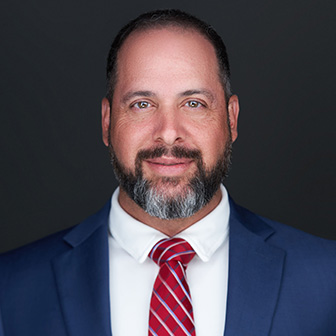
Ryan has more than two decades of experience in planning, development and land use across Florida’s private and public sectors. He works closely with the firm’s attorneys, planners and GIS specialists to prepare and manage land use applications involving rezonings, variances, conditional and special use permits, comprehensive plan amendments, code enforcement matters and development permitting. More on his arrival here.
Ryan Manassee
Tampa | Director of Entitlements (Non-Attorney)
Chambers USA 2026
Our Land Development, Zoning & Environmental team is proud to be ranked in the 2026 edition of Chambers USA, a highly regarded global publisher of directories that ranks the world’s top lawyers and law firms. Rankings are based on extensive research and client and peer interviews.
Recognized Practice Areas
- Environment (Florida – Band 1)
- Real Estate: Zoning/Land Use (North & Central Florida – Band 1)
- Real Estate: Litigation (Florida – Band 2)
Recognized Attorneys
- Elise Batsel | Real Estate: Zoning/Land Use (North & Central Florida)
Reggie Bouthillier | Environment (Florida – Band 2); Real Estate: Zoning/Land Use (North & Central Florida – Band 1) - Jeffrey Collier | Environment (Florida)
- Carl Eldred | Environment (Florida – Band 2)
- Vinette Godelia | Real Estate: Zoning/Land Use (North & Central Florida)
- Brooke Humphrey | Energy & Natural Resources (Band 1)
- Amelia Savage | Environment (Florida)
- Susan Stephens | Environment (Florida)
- Erin Tilton | Real Estate: Zoning/Land Use (North & Central Florida); Real Estate: Litigation